
Trademark Registration
Easily Get the Trade Registration
It just Takes 2 business days, subject to Government processing time.
Introduction to Trademark Registration in India
Trademark registration in India helps protect your business name, logo, or symbol. It gives you the legal right to stop others from using or copying it. The process starts with a trademark search to check if your name or logo is available. Then, we help you file a trademark application with IP India, which is part of the Government of India.
At Taxvalue India we guide you through each step of the trademark registration process. We handle the required documents and help you choose the right trademark class (there are 45 classes). After filing, we track the trademark status and help you get the trademark certificate. Your trademark will be protected for ten years and can be easily renewed.
If you need global protection, we assist with international trademark registration using the Madrid Protocol. Our online process is simple and allows you to follow your trademark’s progress in the trademark registry.
We also manage the power of attorney needed for filing your trademark. Plus, we offer other services like tax filing for your company or LLP. By registering your trademark, you secure your intangible asset and prevent others from using your brand. You can also use the TM symbol to show your trademark is protected.
The benefits of trademark registration include long-term legal protection for your brand, covering specific goods or services in categories like classes 1 – 34 and classes 35 – 45. Our trademark registration fees are clear, and we ensure a successful registration. By registering your trademark, you take an important step to protect your brand.

What is a Trademark?
A trademark is a unique word, letter, or symbol that helps make your brand stand out. It gives you legal protection under intellectual property laws, so others can’t use a similar mark. This helps you protect your brand and avoid trademark infringement.
To register a trademark, you need to apply to a patent and trademark office, IP India like the USPTO in the U.S. Once your trademark is registered, it’s protected for ten years, and you can renew it. For protection in other countries, you can use the Madrid System to register internationally.
Before applying, you should do a trademark search to make sure no one else is using a similar mark. There are different types of trademarks, like certification marks and trade dress, which protect your products or services. When your trademark is officially registered, you can use the registered trademark symbol (®) for legal protection.
Trademarks help show where a product or service comes from and give you full control over your brand. This helps keep your business protected in different places and avoids confusion with other brands. Trademarks offer protection and keep your brand safe from others using it.
Types of Trademarks in India
In India, trademarks are essential for protecting the brand identity of businesses and their products or services. Governed by the Trademark Act, 1999, trademarks can take on various forms depending on what they aim to protect—whether it’s a product, a service, or distinctive brand elements like shape, sound, or designs. Each type of trademark helps distinguish a brand and offers legal protection against unauthorised use, ensuring that the brand’s goods or services cannot be imitated or misused. This protection is vital in helping businesses maintain their uniqueness and preventing infringement.
Product Mark
A product mark is used specifically for products and goods. It helps to identify the origin of the product and distinguishes it from competitors. It applies to physical items sold by a brand.
Example: The Nike swoosh for sports shoes.
Service Mark
A service mark is used to identify services rather than products. It distinguishes the service provider in areas such as hospitality, technology, or consulting.
Example: Airtel for telecom services.
Certification Mark
A certification mark is used to certify that a product meets a specific standard or quality. It guarantees that the goods or services have passed certain evaluations for material, quality, or method of manufacturing.
Example: The ISI mark used for certifying product standards in India.
Collective Mark
A collective mark is used by a group or association to indicate membership and distinguish the goods or services provided by its members. It shows that the entity complies with defined standards.
Example: The mark used by Chartered Accountants to signify membership in their professional association.
Sound Mark
A sound mark is a distinct sound that is closely tied to a brand. If a brand is recognized by a unique sound, it can register that sound as a trademark.
Example: The Intel jingle.
Shape Mark
A shape mark protects the unique, distinctive shape of a product that serves as an identifier of the brand. This type of trademark helps customers recognize the product based on its shape alone.
Example: The Coca-Cola bottle shape.
Pattern Mark
A pattern mark protects unique patterns that are associated with a brand. It helps distinguish a brand’s product when a specific design or pattern is prominently used.
Example: The pattern design on Louis Vuitton handbags.
Word Mark
A word mark protects the text or word itself that is used by the brand. This can include company names, product names, or taglines.
Example: The wordmark for Google.
Trademark Symbols
TM Symbol (™)
The TM symbol signifies that a brand is claimed by its owner, even though the trademark is not yet registered. It provides a degree of protection, helping establish ownership rights in cases of brand disputes or infringement.
R Symbol (®)
The ® symbol indicates that a trademark is officially registered with the relevant authority. It provides full legal protection against unauthorised use, giving the owner the exclusive right to use the brand in connection with specific goods or services.
SM Symbol (℠)
The SM symbol is used for service marks to represent services, even if they are not yet registered. Like the TM symbol, it helps claim ownership of a brand related to services, offering a basic level of protection.
Understanding Trademark Registration
In India, registering a trademark helps protect your brand. This process gives your business legal rights over its logo, design, or other parts of its identity. Before you apply, you should do a trademark search to check if anyone else has a similar trademark. After filing, the Indian Trademark Office reviews your application. If approved, your trademark will be published in the Trademark Journal, giving others time to raise objections. If no one objects, you’ll get a registration certificate that protects your goods or services. You can also apply for international protection through the Madrid Protocol. The filing date is important because it decides the priority of your application. Registering your trademark helps you keep control over your brand and stops others from using it without permission.
Why is Trademark Registration Important?
Registering your trademark is crucial because it helps protect your brand’s identity, builds trust with customers, and ensures your business stands out in a crowded market.
- Legal Protection: A trademark protects your brand from being copied or used by others without permission, which helps keep your business unique.
- Trademark Search: Doing a trademark search ensures that your brand name or logo is original and hasn’t been taken by someone else.
- Online Registration: Registering your trademark online gives your brand legal protection in India and other countries.
- Valuable Asset: A trademark becomes a valuable asset for your business, helping build your reputation and brand recognition.
- Attract Customers: A registered trademark helps make your brand easily recognizable, drawing in both loyal and new customers.
- Legal Action: If someone tries to use your trademark without permission, you have the right to take legal action to stop them.
- Renewal: A trademark lasts for ten years and can be renewed, giving your brand long-term protection.
- Grow Your Business: A trademark helps grow your business by making your brand stand out, increasing its value over time.
- Global Protection: You can register your trademark internationally to protect your brand in other countries as well.
How to Register a Trademark in India
If you want to protect your brand and grow your business in India, registering a trademark is essential. Follow these steps to secure your brand’s rights:
Step 1: Search for Existing Trademarks (™ search)
Before applying, search for existing trademarks on the IP India website. This helps ensure your chosen trademark isn’t already in use.
Step 2: Submit Your Trademark Application
Once the search is complete, you can file your trademark application in two ways:
- Manual filing: Submit application forms at the trademark office.
- Online filing: Use the trademark registration portal for a faster process.
You can apply for one class of goods or services or for multiple classes, depending on your business. Fees vary based on the number of classes.
Step 3: Examination of Your Application
- After submission, your application is reviewed by the Indian Trademark Registry. The registrar officer will issue an examination report to check if your trademark follows the rules of the Trademark Act 1999.
- If everything is in order, the trademark will be published in the Trademark Journal.
Step 4: Publication in the Trademark Journal
Your trademark will be published in the Trademark Journal. After publication, there is a four-month opposition period where others can oppose your application. If no one objects during these months from the date of publication, your application moves forward.
Step 5: Receive Your Trademark Certificate
If there is no opposition, or if it is resolved, you will receive your trademark registration certificate. Once you get the certificate, your brand is officially protected, and you can use the TM symbol (™).
Step 6: Monitor Your Application
Throughout the process, you can check the trademark status on the India portal. It’s important to stay updated as the registration process can take several months. By following these steps, you can complete the trademark registration process in India and ensure your brand is legally protected.
Legal Framework for Trademark Registration in India
India’s trademark system protects businesses from unauthorised use of their brand. The key components are the Trade Marks Act, 1999, the Trade Marks Rules, 2017, and the Madrid Protocol for international registration.
The Indian Trademark Act
The Trade Marks Act, 1999 outlines how to register and protect trademarks in India. Important points include:
- Classes of Goods and Services: Trademarks are grouped into different classes (for goods and services) under the Nice Classification.
- Distinctiveness: A trademark must be unique or have gained recognition over time (acquired distinctiveness).
- Refusal Grounds: Trademarks can be rejected if they cause confusion or lack distinctiveness.
- Duration: Once registered, a trademark lasts for 10 years and can be renewed.
Trademarks cover brand names, logos, colors, sounds, and shapes to help businesses protect their identity.
Role of the Controller General of Patents, Designs, and Trademarks
The Controller General manages trademark registrations, including:
- Examining applications and issuing registration certificates.
- Publishing trademarks in the Trade Marks Journal for public review.
- Managing international trademarks through the Madrid Protocol.
Madrid Protocol and International Trademarks
India is part of the Madrid Protocol, which allows businesses to apply for trademark protection in multiple countries with one application, making it easier to protect your brand worldwide.
Trademark Rules and Regulations in India
The Trade Marks Rules, 2017 outline the process for registering and maintaining trademarks, including:
- Application Process: You can apply for trademarks online, with different fees for individuals and companies.
- Opposition: After a trademark is published, others have three months to oppose it.
- Renewal: Trademarks need to be renewed every 10 years to remain valid.
These rules ensure businesses can efficiently protect their brands
Benefits of Trademark Registration
Registering a trademark helps protect your business and brand. It makes sure no one else can use your name, logo, or product design. Here are the key benefits:
- Exclusive Rights: You have full control over your trademark.
- Builds Trust and Loyalty: Your brand becomes known for quality, which builds customer trust.
- Differentiates Your Product: Makes your product stand out in the market.
- Represents Quality: Shows that your products or services meet high standards.
- Creates a Business Asset: A registered trademark becomes a valuable business asset.
- Legal Use of ® Symbol: You can legally use the ® symbol to show your trademark is registered.
- Protection Against Infringement: You can take legal action if someone uses your trademark without permission.
- Cost-Effective Protection: Trademark registration is affordable and lasts a long time.
- International Registration: Registering in India can help you register your brand globally.
- Attracts Top Talent: A well-known trademark can attract the best employees.
- Brand Protection: Keeps others from using your brand name or logo.
- Legal Protection: Gives you the right to protect your brand through the law.
- Protects Business Identity: Helps keep your business identity unique.
Trademark Class Selection
Selecting the appropriate trademark class is essential in the registration process, as it organises goods and services into 45 distinct categories. Choosing the correct class is vital for the validity of your trademark registration, as it directly relates to your business’s products or services. If your company operates in multiple areas that fall under different classes, it’s important to apply for a trademark in all relevant categories. In India, commonly selected Trademark classes include:

Class 9
Includes computer software and electronics

Class 25
Covers clothing

Class 35
Relates to business management and advertising

Class 41
Pertains to education and entertainment
Trademark Registration Process
Before you can manage or protect your trademark, understanding the trademark registration process is the first step to securing your brand’s legal rights.
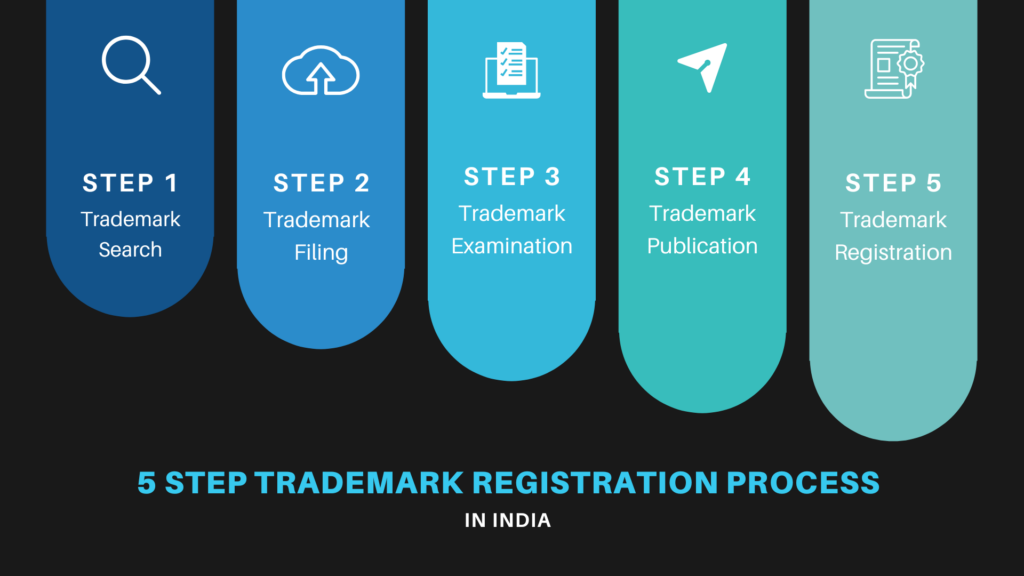
Step 1: Trademark Search
Before you apply for a trademark, you need to check if it’s already taken.
- Why is a Trademark Search Important: It helps ensure that your trademark is unique and avoids application rejections.
- How to Conduct a Trademark Search: Use our Trademark Search Tool to see if similar trademarks exist.
- Understanding the Trademark Search Report: This report shows any possible conflicts and helps you decide if you should go ahead with your application.
Step 2: Filing a Trademark Application
Once you confirm your trademark is available, you can file your application.
- Preparing Your Application: Fill in details about your trademark and how you plan to use it.
- Documents Needed: You’ll need proof of identity, address proof, and a picture or description of the trademark.
- Online vs. Offline Filing: We suggest filing online for a quicker process.
- Fees for Trademark Registration: Know the costs involved, which vary depending on the trademark type and filing method.
Step 3: Examination of the Trademark Application
After you submit, your application will be checked.
- Trademark Examination Report: The registrar reviews your application and may list any issues.
- Responding to Objections: If there are problems, you need to address them quickly to keep things moving.
- Common Reasons for Rejection: These can include lack of uniqueness or being too similar to existing trademarks.
Step 4: Publication in Trademark Journal
If your application passes, your trademark will be published for everyone to see.
- Why is Publication Important? It gives others a chance to challenge your trademark, promoting fair competition.
- What Happens After Publication? If no one opposes it within a certain time, your trademark can move forward to registration.
- Trademark Opposition Process: If someone challenges your trademark, you must respond to defend it.
Step 5: Trademark Registration Certificate
Once all steps are complete, you will receive your trademark registration.
- Getting Your Trademark Certificate: This document proves your rights to the trademark.
- Validity and Renewal: Trademarks last for ten years and can be renewed indefinitely to maintain protection.
Post-Registration Procedures
After registering a trademark, it’s important to manage it effectively. This includes timely renewals, addressing any necessary changes or cancellations, and handling infringement issues through legal actions to protect your trademark rights.
Trademark Renewal Process
Step 1: Submitting the Application
To renew your trademark, complete Form TM-R and submit it to the Trademark Registry. Include your trademark registration number, current status, and your contact information.
Step 2: Scrutiny and Review
The Registry will review your application to ensure it’s eligible for renewal. If there are any concerns, they will notify you, and you must respond within a specific timeframe.
Step 3: Announcement in the Trademark Journal
Once approved, the renewed trademark details will be published in the Trademark Journal. This gives third parties four months to raise any objections.
Step 4: Granting the Renewal Certificate
If there are no objections or they are resolved, the Registry will issue the Trademark Renewal Certificate, confirming the trademark is renewed for another 10 years.
Trademark Rectification and Cancellation
Trademark rectification and cancellation processes allow for the correction or removal of trademarks that have been wrongly registered or no longer meet legal requirements. Below are the following steps:
Grounds for Rectification of Trademark
In India, you can request rectification of a trademark for specific reasons under Section 57 of the Trade Marks Act (1999):
Violation of Conditions: If there’s a violation of registered trademark conditions, you can ask for rectification from the High Court or Registrar.
Missing or Incorrect Entries: If an entry is missing or wrong in the trademark register, anyone can seek rectification.
Decision on Important Questions: The High Court or Registrar may address key issues during the rectification process.
Starting Rectification Proceedings: After notifying relevant parties, the High Court or Registrar can initiate rectification proceedings.
Notice of Rectification Order: Once a decision is made, a notice will be issued, and the register will be updated accordingly.
Filing a Rectification Application
To request rectification or cancellation, use the following forms:
TM-16 Form: For trademark holders seeking rectification or cancellation, along with the required fee.
TM-M Form: For situations initiated by the Registrar, including necessary fees.
TM-26 Form: For aggrieved individuals filing for rectification or cancellation, also with applicable fees.
Trademark Cancellation Process
To cancel a trademark registration, the proprietor must submit Form TM-P to the Registrar, along with a fee and an affidavit stating the reasons for cancellation. If the affidavit is not submitted, the Registrar will issue a notice requesting it. Processing typically takes four to six months.
Trademark Infringement and Legal Remedies
Trademark infringement occurs when a registered trademark is used without permission, leading to confusion or deception among consumers. Here’s how to identify and address trademark infringement:
Identifying Trademark Infringement
Regularly monitor social media, e-commerce sites, and search engines for unauthorised uses of your trademark. Look for similar brand names, logos, or products that might confuse consumers. Thorough searches and consultations with legal experts can help identify infringements.
Legal Action Against Infringement
Civil Remedies: Trademark owners can take civil action under the Trade Marks Act, 1999, to address infringement.
Criminal Remedies: Indian law allows for criminal actions against trademark infringement, classifying these as cognizable offences under the Indian Penal Code.
Role of the Courts in Trademark Disputes
In cases where someone uses a registered trademark without permission, the courts are important for resolving the issue. Here’s how they help:
Determining Protection: Courts decide how much protection the trademark has. They check if the trademark is valid and what rights the owner has.
Checking for Confusion: Courts look at whether the similar trademark could confuse customers. If people might mix them up, this can affect the court’s decision.
Issuing Injunctions: If a trademark is being misused, courts can issue injunctions. These are orders that stop the unauthorised party from using the trademark.
Protecting Trademark Rights: Courts play a crucial role in keeping the trademark registration process fair. They ensure that trademark owners get the protection they need for their rights.
In short, courts help protect trademarks, prevent confusion among consumers, and ensure trademark owners can defend their rights.
Managing Your Trademark
Managing your trademark involves important tasks such as transferring it to someone else (assignment), allowing others to use it (licensing), and addressing any challenges to protect your rights.
What is Trademark Assignment?
Trademark assignment is when you transfer ownership of your trademark to someone else. This means you give up your rights to that trademark.
Types of Trademark Assignment
Complete Assignment: You give all rights to the trademark to the new owner.
Partial Assignment: You transfer rights for certain products or services but keep some rights for yourself.
Assignment with Goodwill: You transfer the trademark along with your business reputation and customer relationships.
Assignment without Goodwill: You transfer the trademark but not the reputation of your business.
Legal Requirements for Assignment
To assign a trademark, you need these documents:
Trademark Registration Certificate: Proof that the trademark is registered.
Identity and Address Proof: Information about both the original owner and the new owner.
No Objection Certificate (NOC): A document from the original owner stating they have no objection to the transfer.
Description of Assignment: State if it includes goodwill.
Registrar’s Direction: A copy of any advertisement related to the assignment.
Signatures: Signatures from both parties and witnesses.
Notarization: A notarized document from an official.
Execution Date and Place: Details on when and where the assignment took place.
Power of Attorney/Authorization Letter: Legal permission for the assignment process.
Understanding Trademark Licensing
Trademark licensing allows you to give someone permission to use your trademark without giving up ownership. This is done through a licensing agreement, usually for a fee.
Trademark Licensing Agreements
A trademark licensing agreement is a contract between you (the owner) and another party (the licensee). It allows the licensee to use the trademark on certain products in a specific area. The agreement includes:
Quality standards for the products
Details about how the products are made
How to resolve disputes
Conditions for ending the agreement
Advantages of Trademark Licensing
Trademark licensing offers several advantages for both the trademark owner (licensor) and the licensee. Here are the key benefits:
Financial Gain:
The licensor earns royalties while the licensee profits from the brand’s established reputation. This creates a win-win situation where both parties benefit financially.
Growth of the Trademark Owner’s Business:
The trademark owner can expand their business into new markets by utilizing the licensee’s distribution channels and expertise. This helps in reaching more customers without significant investment.
Expanding Brand Recognition:
Licensing increases the brand’s visibility and recognition, especially in regions where it was previously unknown. This helps build a stronger brand presence in new markets.
Growth in Trademark Popularity:
As more consumers become familiar with the trademark through licensing, its popularity and market reach increase. This can lead to higher sales and brand loyalty.
Workload Redistribution/Reduction:
Licensing reduces the licensor’s workload by transferring some responsibilities to the licensee. The licensee takes on the tasks of maintaining product quality and service standards, allowing the licensor to focus on other business areas.
Dealing with Trademark Opposition
When facing trademark opposition, it’s important to respond promptly to protect your rights. Here’s how to manage the process:
Responding to Trademark Opposition Notices
After receiving an opposition notice, file a counterstatement using Form TM-O within two months. Following this, both parties exchange evidence: the opposing party presents their case, and you respond with your own evidence. The Registrar may allow additional evidence from the opposition before proceeding to a hearing, where both sides present their arguments.
Preparing for Trademark Opposition Hearings
Prepare thoroughly by gathering all necessary evidence, understanding the opposition process, and presenting your case clearly during the hearing. The Registrar will decide based on the evidence presented.